At the far end of a quiet, sun-dappled lane stood a modest little house, wrapped in vines and memories. Within its aging walls lived Ram Prasad, a kind-hearted, silver-haired man whose hands bore the marks of a life spent working tirelessly—for his family, for his future, for love.
But as time passed, life grew quieter. His children had moved to cities far away, chasing their dreams. The rooms once filled with laughter now echoed only with silence. Ram Prasad’s days became still. The ticking of the clock was often the loudest sound in the house. He had meals alone, spoke little, and stared out the window, waiting… but for what, he did not know.
One crisp winter morning, Ram Prasad wandered through the local market, not looking for anything in particular. He moved slowly, as though time itself had softened. But then, amidst the bustle and noise, his eyes caught a glimpse of something—small, white, and impossibly soft. A rabbit.
It sat quietly in a small wooden crate, its pink nose twitching, large eyes full of innocence and calm. For a reason he couldn’t explain, his chest tightened, and tears he didn’t expect began to prick at his eyes. The little rabbit reminded him of something pure, something forgotten—the quiet need to be loved, and to love in return.
Without another thought, he brought her home. He named her Gullu.
At first, she was shy—hesitant, even. But she had a gentle spirit that mirrored his own. She made a cozy nest near the fireplace, and slowly, like sunlight after a long storm, she began to bring warmth into Ram Prasad’s life.
Each morning, before the old man’s slippers even touched the floor, Gullu would be waiting, her tiny paws tapping against the wooden tiles. She’d hop onto the rug near his chair as he sipped his tea, her presence silent but comforting. She didn’t need words. She only needed to be near him.
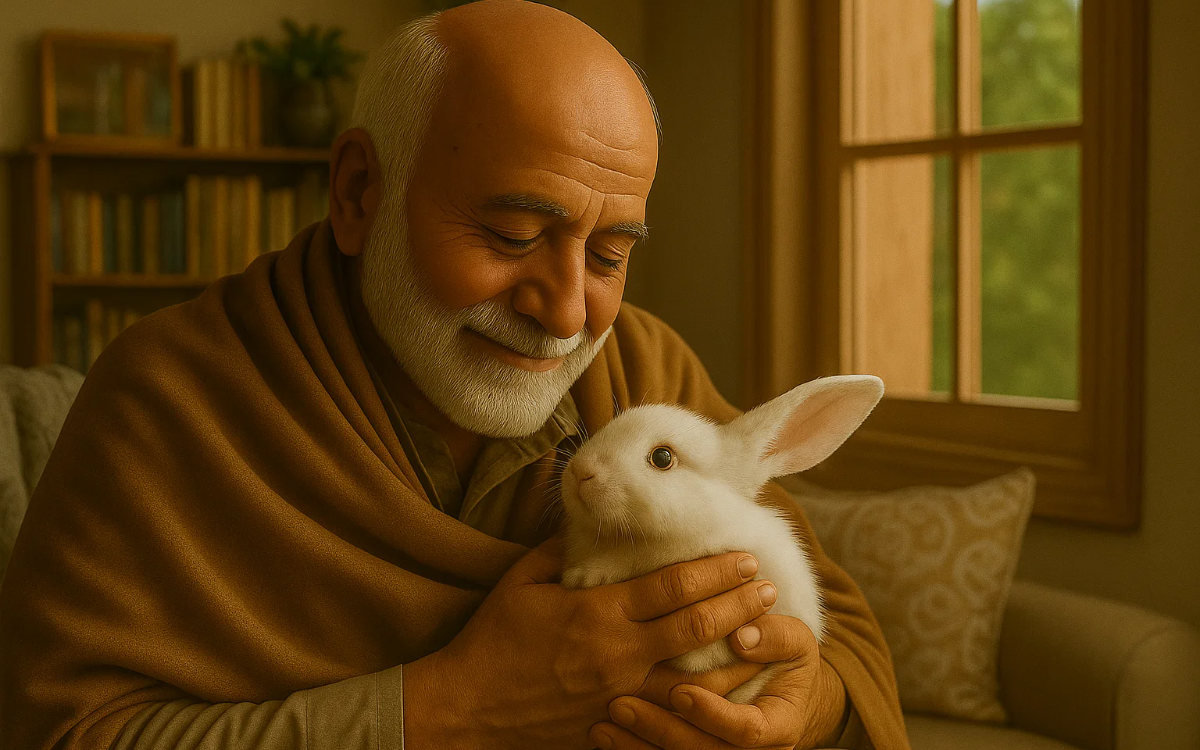
He’d talk to her, tell her stories of his youth. He’d hum songs he hadn’t sung in years while brushing her soft fur. And every evening, as the cold crept in, Gullu would curl into the folds of his shawl and rest—breathing slow, trusting, and safe.
With every gentle hop and every nose nuzzle, Gullu began to mend what time had tried to break. Ram Prasad started smiling again—not just with his lips but with his eyes. The loneliness that once haunted his every step now sat quietly beside love, no longer a burden, but a memory softened by the present.
Neighbors noticed. Friends who hadn’t seen him in months now found a new light in his eyes. He was no longer just surviving—he was living again, all because of a rabbit who asked for nothing but gave everything.
When a Rabbit Heals a Heart
Ram Prasad’s story is not rare. Rabbits may be small, but their love is immense. They don’t speak, yet they listen better than most. Their soft presence, their tender eyes, their warm bodies nestled in your arms—these things have the power to heal wounds that even time forgets to touch.
In today’s world, we often search for comfort in noise, in screens, in speed. But perhaps what we truly need is quiet companionship—something gentle, soft, and full of unspoken love.
If you, or someone you know, longs for warmth, healing, and a friend who will never judge, consider bringing a rabbit into your home. Let your heart be open to the quiet magic of a creature who doesn’t just fill a cage, but fills your soul.
Because sometimes, it only takes one tiny hop to lead you back to happiness.
Let us help you find your Gullu. Search for your favourite pet at petshobbies and discover the gentle companions waiting to begin their story with you. 🐇💕
Psychological benefits of owning a rabbit, supported by research or professional insights:
1. Stress Reduction and Lower Anxiety
Interaction with rabbits (petting, holding, or watching them play) can lower cortisol levels, the hormone linked to stress.
A study published in Psychological Reports (2009) found that quiet, repetitive interactions with calm animals, such as grooming a rabbit, helped participants reduce symptoms of anxiety.
2. Emotional Support and Comfort
Rabbits provide non-judgmental companionship, which can be incredibly comforting for people dealing with loneliness, depression, or trauma.
Like therapy animals, rabbits have been used in animal-assisted interventions for children with autism, elderly individuals with dementia, and those suffering from PTSD.
3. Encouragement of Mindfulness
Watching a rabbit eat, explore, or groom itself encourages stillness and presence, helping individuals slow down and become more aware of the moment — a practice similar to mindfulness meditation.
This can reduce rumination, which is common in anxiety and depression.
4. Reduction of Loneliness
A study in Aging & Mental Health found that elderly individuals with small pets, including rabbits, reported less perceived loneliness and more routine in life.
Rabbits are particularly suitable for older adults due to their quiet nature and minimal space requirements.
5. Improved Mood and Emotional Resilience
Taking care of a rabbit — feeding, cleaning, and playing — gives a sense of purpose and responsibility, which can uplift mood and increase self-worth.
Daily bonding with rabbits triggers the release of oxytocin, the “love hormone,” which fosters bonding and emotional resilience.
6. Support for Children’s Emotional Growth
Children with pet rabbits have shown improvements in empathy, patience, and nurturing behavior.
A 2015 study in the Journal of Pediatric Nursing found that small pet ownership (especially rabbits) helped children develop emotional regulation and cope better with social anxiety.
7. Helps in Building Routines
Rabbits need consistent care, which helps owners establish healthy daily routines — especially helpful for people with depression or ADHD.



Add comment